
Psyllium Husk and PHGG: What Each Fibre Actually Does
Psyllium husk works fast and works well for many people. PHGG (partially hydrolysed guar gum) takes a different route to a similar result, and it's one of the fibres in our own blend.

The short answer
Psyllium husk: fast, mechanical relief
Psyllium husk absorbs water and forms a gel in your gut, bulking and softening stool. It works quickly and is well tolerated by most people, including many with IBS. What it doesn't do much of is feed your gut bacteria. It passes through largely unfermented.
PHGG: relief that also feeds your gut bacteria
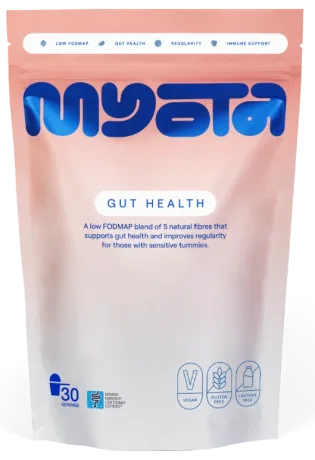
Partially hydrolysed guar gum (PHGG), sometimes sold under the brand name Sunfiber, takes a slower route. Your gut bacteria ferment it gradually, easing bloating and irregularity while also producing the compounds that support a healthy gut lining. It's one of the five fibres in our Gut Health blend for exactly this reason.
Psyllium husk
Bulks and softens
Forms a gel in the gut, relieving symptoms quickly. Passes through largely unfermented, so it doesn't feed your gut bacteria much.
PHGG (Sunfiber)
Relieves and feeds
A slowly fermented fibre that eases bloating and irregularity while also feeding beneficial gut bacteria. It's one of the five fibres in our Gut Health blend.

Psyllium husk forms a gel and passes through largely unfermented; PHGG is slowly fermented, feeding gut bacteria as it goes.
Worth knowing
1 of 5
PHGG is one of the five prebiotic fibres in our Gut Health blend, chosen for its dual role in symptom relief and feeding gut bacteria.


Researched with


Not sure which fibres you need?
Six questions about your digestion, energy and diet. We'll point you to the right blend.
Keep reading

From Biohacking to Bioharmony: the softer wellness trend of 2026
Forget the numbers and the spreadsheets. Wellness in 2026 is all about going with the flow.
Read more
Beat the seasonal allergies and ease inflammation
Ah summer - sunshine, beach days, and unfortunately also seasonal allergies. But fret not! Here are some of our favourite foods to ease inflammation, support your immune system and alleviate those pesky symptoms.
Read more
High protein or high fibre? What should I be focusing on?
Social media is obsessed with protein. From shakes to bars, it’s the nutrient everyone’s talking about. But here’s the catch. Only around 10% of people are actually protein deficient. Instead, we continue to ignore a nutrient that 90% of us are deficient in. That’s right, it’s time fibre had its moment.
Read more